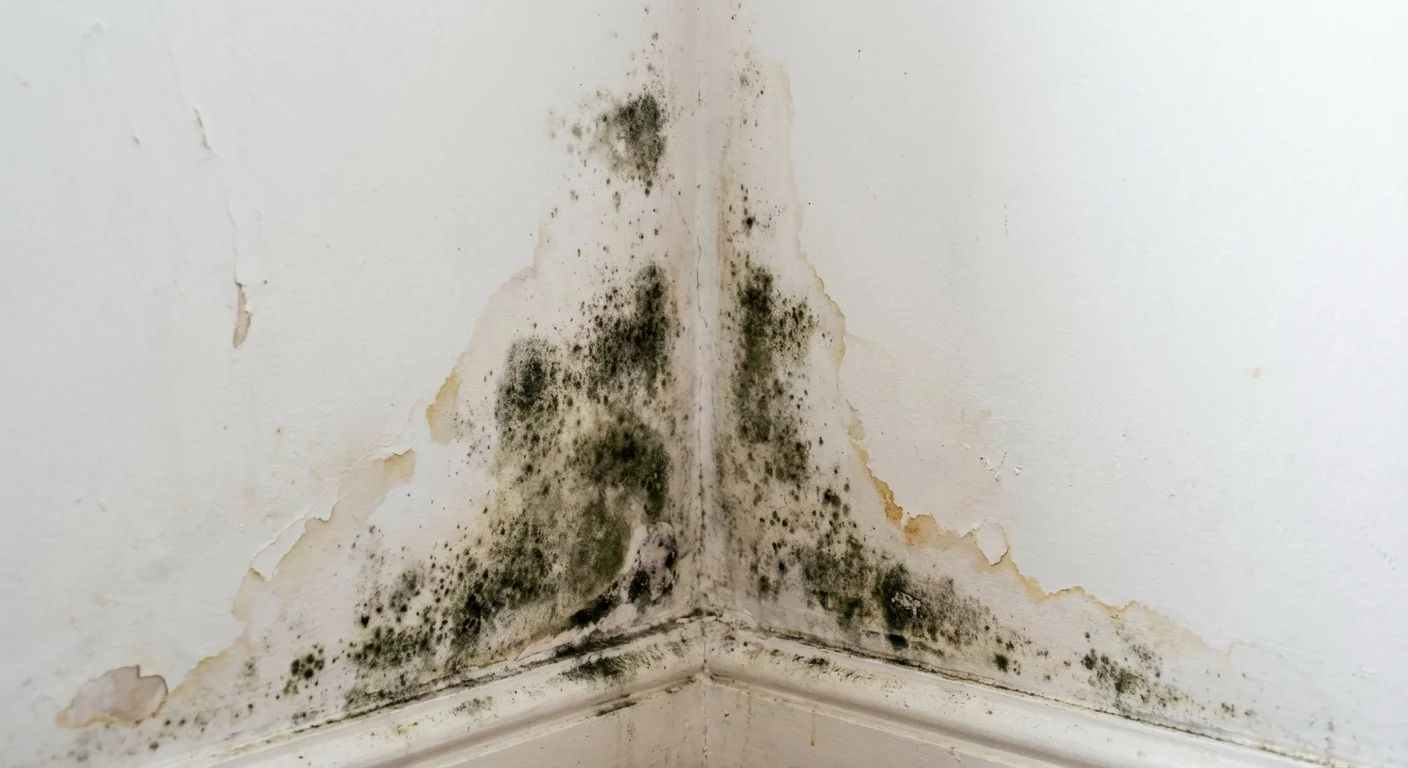
We identify the cause of your mould problem and install the right solution to prevent it returning. Serving Manchester, Tameside, Stockport, Trafford, Oldham, Rochdale, Wigan, Bolton and Bury.
If you have dealt with black mould by cleaning it off and painting over it, only to see it return within weeks or months, you are not alone. This is the experience of most homeowners who try to tackle mould themselves. The reason is simple: surface treatments address the symptom, not the cause.
Black mould (most commonly Cladosporium, Aspergillus and Penicillium species in UK homes) grows wherever conditions allow. Those conditions are high relative humidity and a suitable surface. In a home with condensation problems, high humidity is a constant state. Treating the mould without reducing humidity is like repeatedly bailing out a boat without patching the hole.
The permanent solution is to reduce indoor relative humidity below 70%, ideally to 50-60%, at which point condensation cannot form on typical wall and ceiling temperatures. This is achieved through ventilation, not through chemical treatment. For most Greater Manchester properties, that means a PIV system, upgraded extraction or both.
Important for landlords and tenants: Under the Homes (Fitness for Human Habitation) Act 2018, landlords are legally required to ensure their properties are free from serious hazards including damp and mould. Failure to address persistent mould can expose landlords to legal action and significant financial penalties.
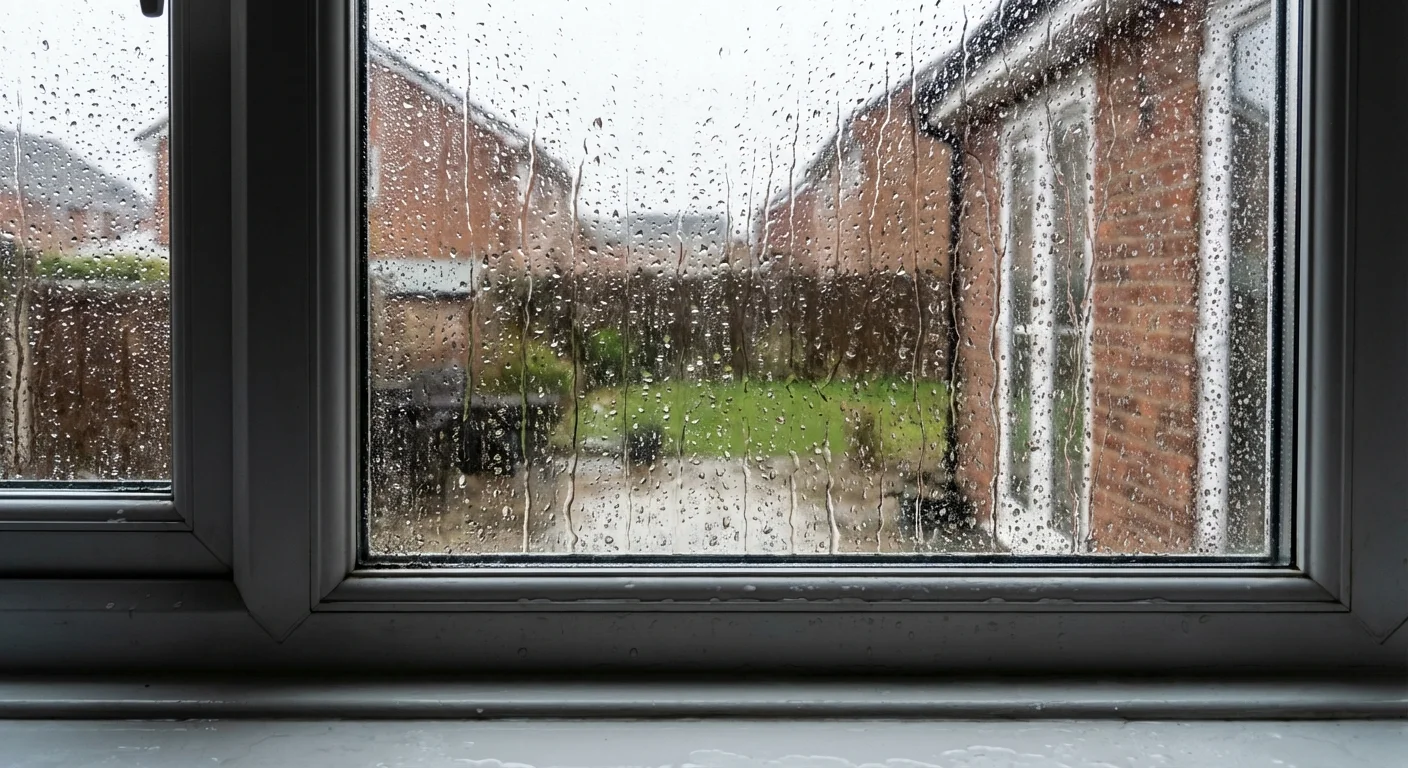

Mould in UK homes generally falls into one of three categories. Each has a different cause and a different solution. Getting the diagnosis right is the most important step.
By far the most common cause in Greater Manchester. Warm, moist air from daily activities condenses on cold surfaces. Appears as black mould on external walls, window reveals, bathroom ceilings and wardrobes against outside walls. Solved by improved ventilation, usually a PIV system.
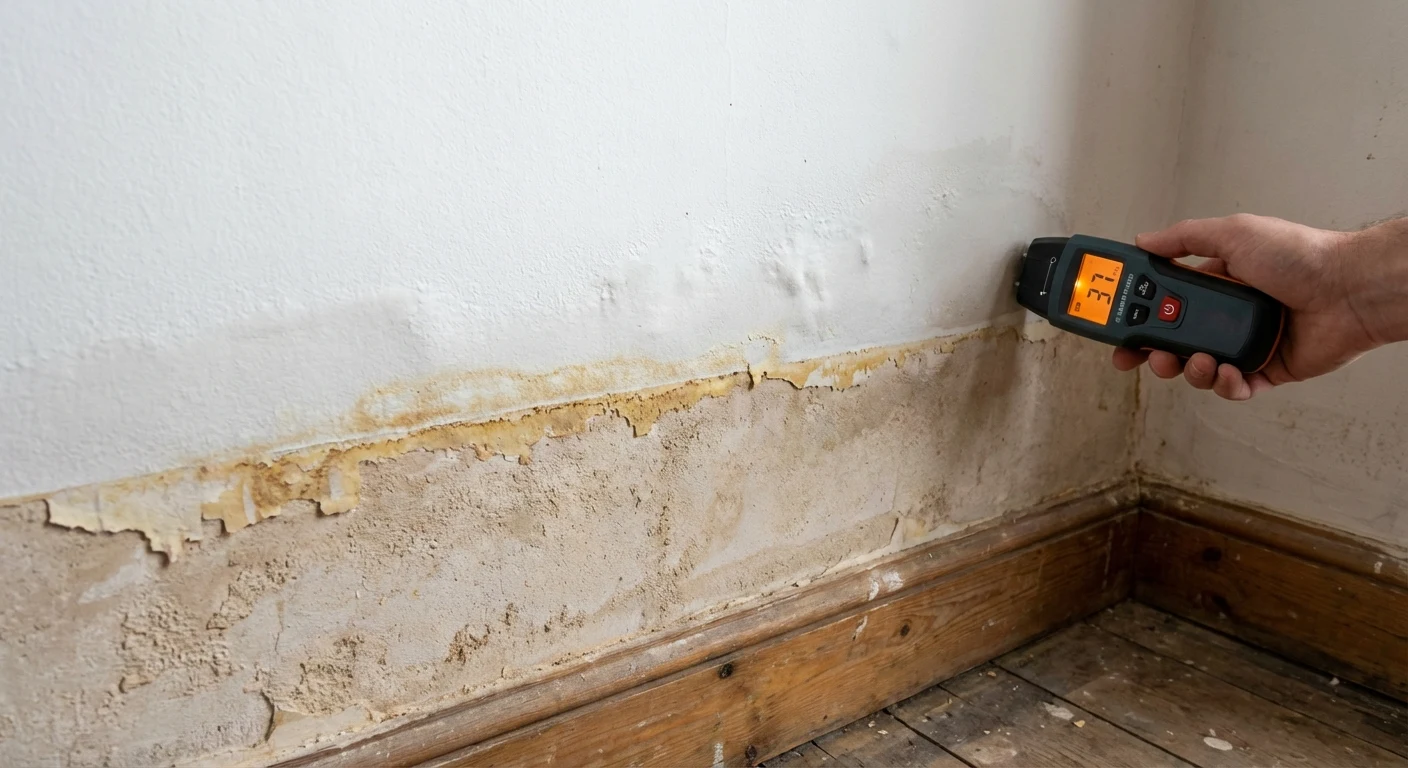
Groundwater wicks up through a wall that has no effective damp proof course, or where the DPC has failed. Appears as a tide mark of salts and staining on lower walls, typically up to 1 metre from the floor. Solved by DPC injection and replastering.
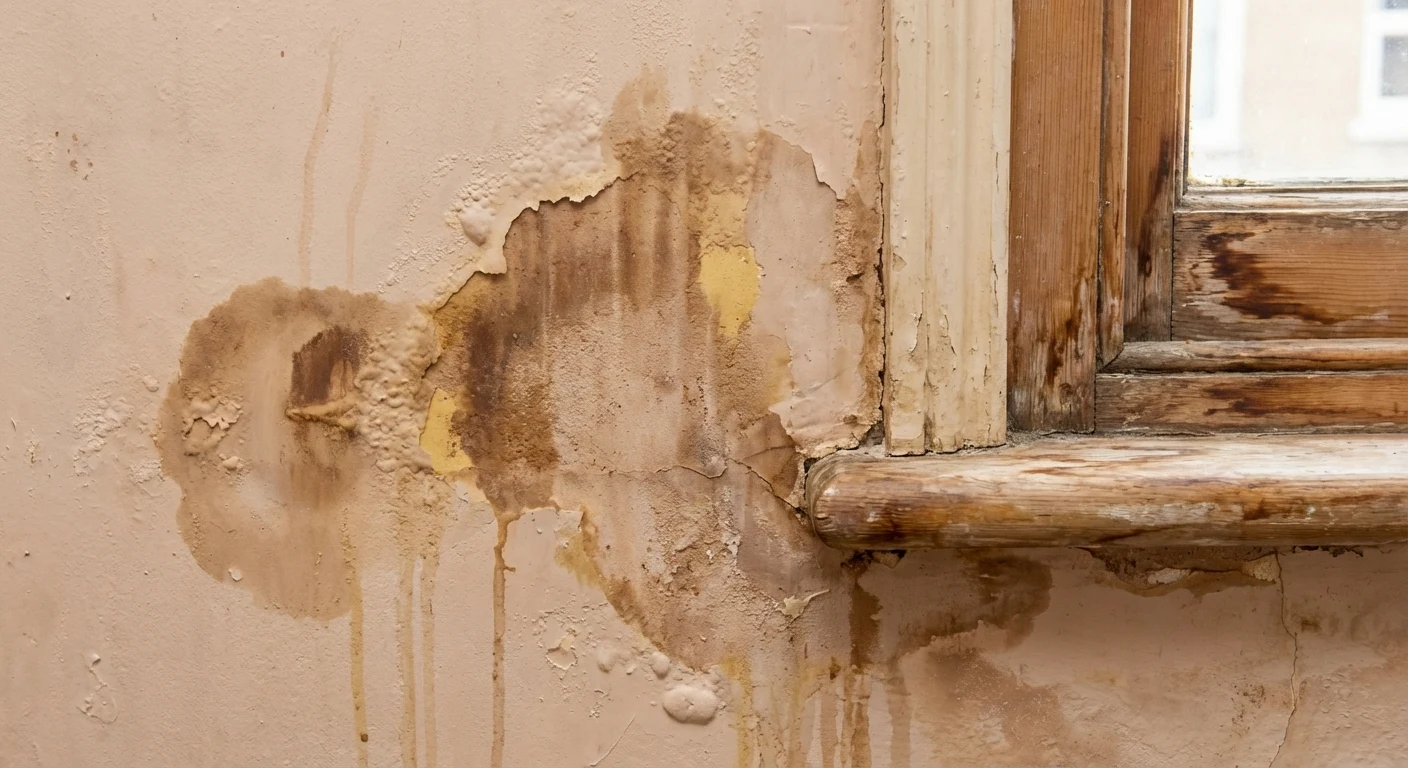
Water enters through defects in the external fabric: failed pointing, cracked render, defective gutters or window seals. Appears in patches that grow during or after rain. Solved by identifying and repairing the defect, then treating the internal damage.
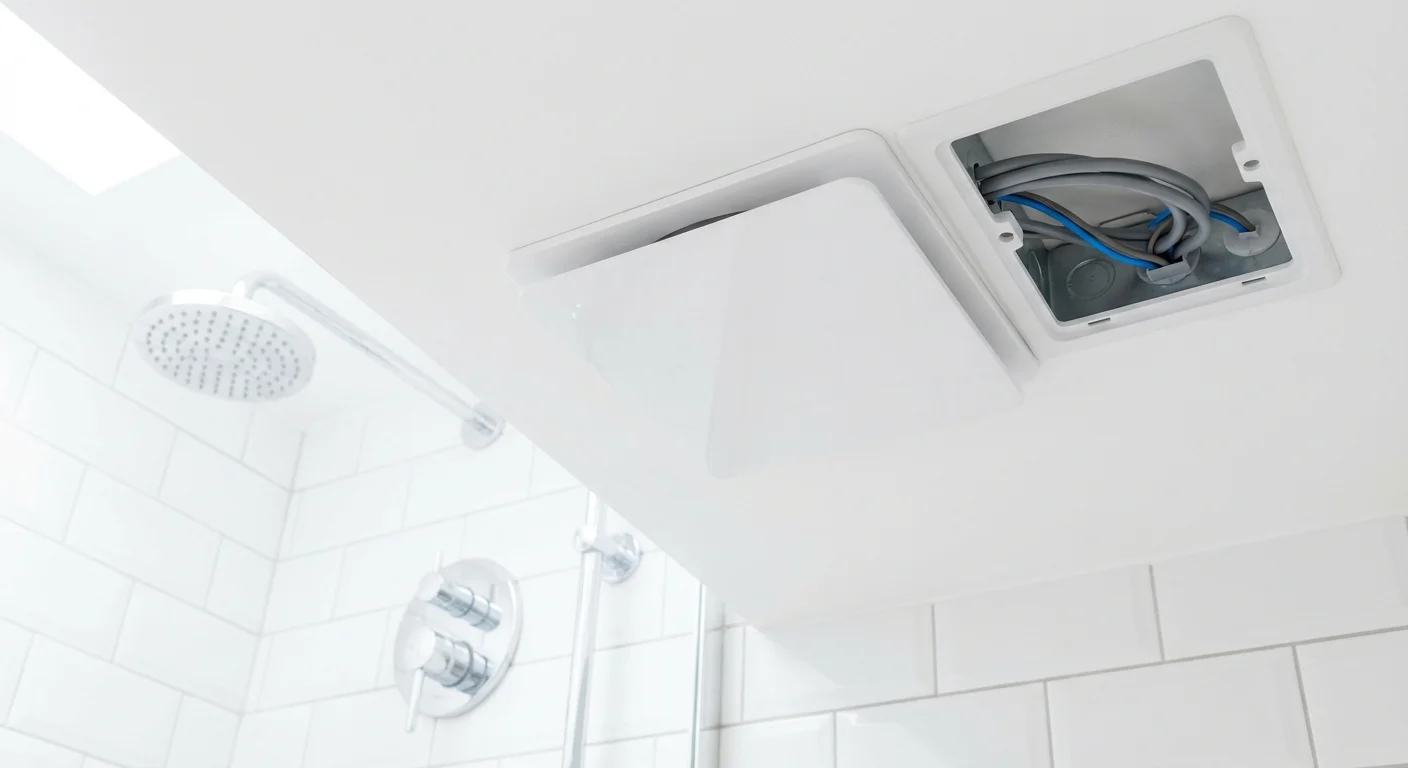
Poorly specified or incorrectly installed bathroom and kitchen extraction allows moisture to migrate into adjacent rooms before being removed. Often occurs in older properties where extractor fans were added retrospectively without adequate duct runs. Solved by upgraded extractor fans.
Our process is designed to resolve mould permanently, not temporarily. Every step is diagnostic before it is prescriptive.
We attend the property and carry out a full assessment. We measure indoor and outdoor relative humidity, check for signs of rising or penetrating damp, inspect extraction and test air flow rates in bathrooms and kitchens. This takes 45 minutes to an hour and is free of charge.
Based on the assessment, we identify the type or types of damp causing the mould and provide a written recommendation. If the problem is condensation, we recommend the appropriate ventilation solution. If it is rising or penetrating damp, we explain what structural works are needed.
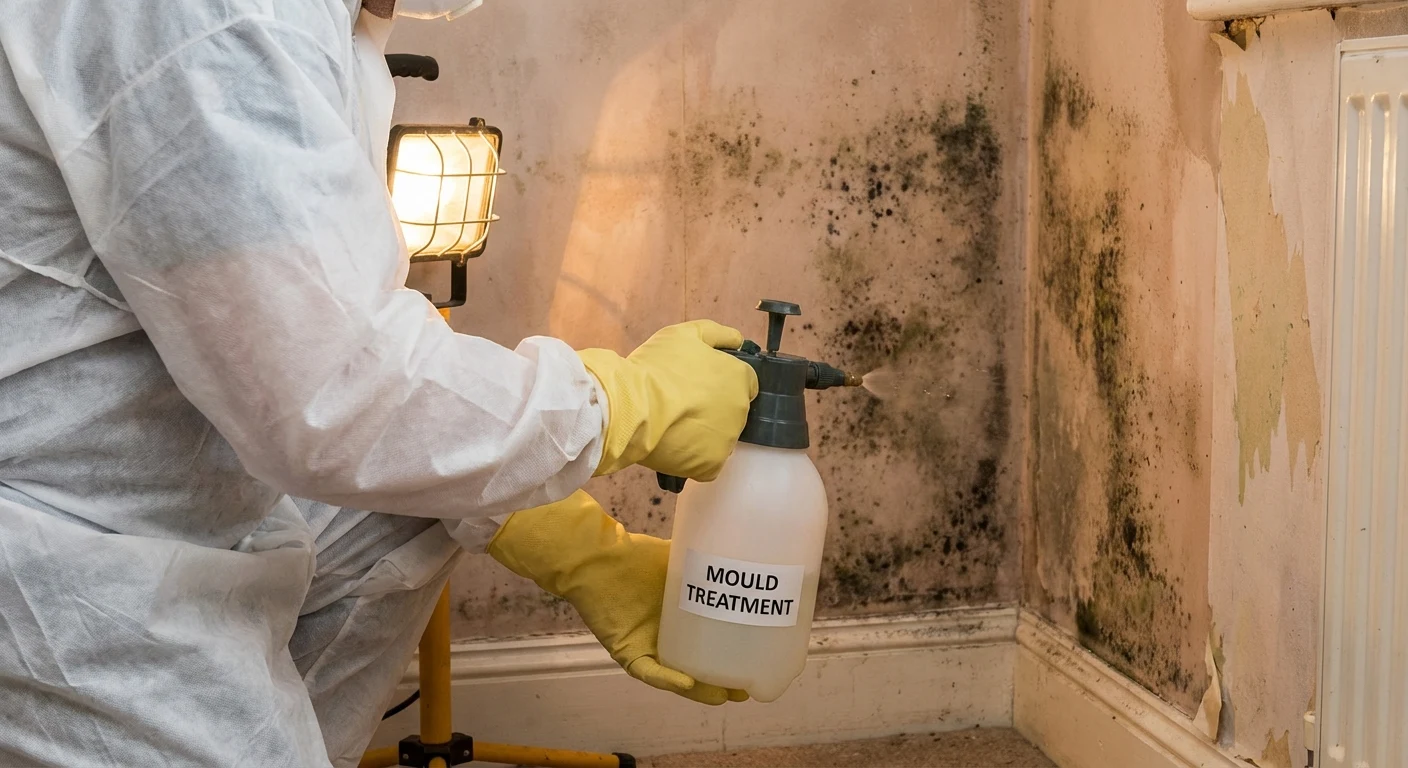
Existing mould is treated with a professional-grade biocidal wash that kills spores on contact. We treat all affected areas thoroughly, not just the visible patches. Mould remediation is included in the installation price where a ventilation solution is also being installed.
The appropriate ventilation solution is installed. For most condensation problems this is a loft or compact PIV system. Where extraction is the issue, we install correctly specified fans with proper duct runs and external terminations. Installation is clean and tidy and typically completed in one visit.
We follow up after four to six weeks to confirm humidity levels have reduced and that mould has not returned. If there are any concerns we attend and investigate. Our aim is complete resolution, not a temporary improvement.
Mould in the home is a health hazard, not merely an aesthetic problem. Understanding the risks and the legal obligations helps both tenants and landlords make informed decisions.
Mould releases spores and mycotoxins into the air. These are inhaled during normal daily activity. Documented health effects include:
The 2022 inquest into the death of Awaab Ishak, a two-year-old who died from a respiratory condition linked to severe mould in a social housing property in Rochdale, prompted significant legislative change. The Social Housing (Regulation) Act 2023 introduced Awaab's Law, requiring landlords to address mould reports within specified timeframes.
Homes Act 2018: Landlords must ensure properties are fit for human habitation throughout the tenancy. Damp and mould are Category 1 hazards.
HHSRS: Under the Housing Health and Safety Rating System, damp and mould are assessed as category 1 hazards capable of generating council enforcement action.
Awaab's Law 2023: Social landlords must investigate mould reports within 14 days and begin remediation within 7 days where a health risk is identified.
Renters' Rights Bill: Further strengthens tenants' rights to enforce landlord obligations regarding damp and mould.
"Had mould in three rooms for two winters. Came out, assessed the property and fitted a PIV system. Six months on and not a spot of mould anywhere. Should have sorted it years ago."Karen P. Stockport
"We had tried every surface spray on the market and the mould kept coming back. They explained it was a condensation issue and sorted it in one visit. Brilliant service."D. Holt Tameside
In the vast majority of UK homes, black mould is caused by condensation. Warm, moisture-laden air produced by cooking, bathing and breathing meets cold surfaces such as walls, windows and ceilings. When air cannot hold any more moisture it deposits it as water on those surfaces. If this happens repeatedly, mould spores germinate and spread. The solution is not bleach or antifungal paint but reducing indoor humidity through improved ventilation.
Persistent mould growth releases spores into the air. These can aggravate or trigger respiratory conditions including asthma, rhinitis and sinusitis. Children, elderly people and those with compromised immune systems are particularly vulnerable. The UK Government identifies damp and mould as a Category 1 hazard under the Housing Health and Safety Rating System.
No. Antifungal paint and surface treatments kill surface mould temporarily but do not address the moisture that causes it. Within weeks or months the mould returns, often more aggressively as it grows through the fresh paint layer. The only permanent solution is to reduce indoor humidity to the point where condensation cannot form.
Existing mould is treated with a biocidal wash as part of the installation process. New mould growth typically stops within two to four weeks as humidity levels fall. Over the following months, as conditions improve, mould staining fades. Most customers report no recurrence within the first three months of the system running.
Tenant lifestyle can contribute to condensation but it is rarely the primary cause. A correctly ventilated property can accommodate normal activities such as cooking, bathing and drying clothes without developing mould. If a property develops significant mould growth under normal domestic use, it is almost always a ventilation deficiency rather than a tenant behaviour issue. Under the Homes (Fitness for Human Habitation) Act 2018, landlords are legally required to ensure properties are free from serious mould and damp.
We cover Manchester, Tameside, Stockport, Trafford, Lancashire, Oldham, Rochdale, Wigan, Bolton, Bury and all surrounding areas. For large multi-property contracts we can travel nationally. Call to confirm availability in your area.
Call for an honest assessment and a clear recommendation. No upselling, no jargon. We cover Manchester, Tameside, Stockport, Trafford, Lancashire, Oldham, Rochdale, Wigan, Bolton and Bury.
07791 561944Mon-Fri 8am-6pm, Sat 9am-4pm